Formation
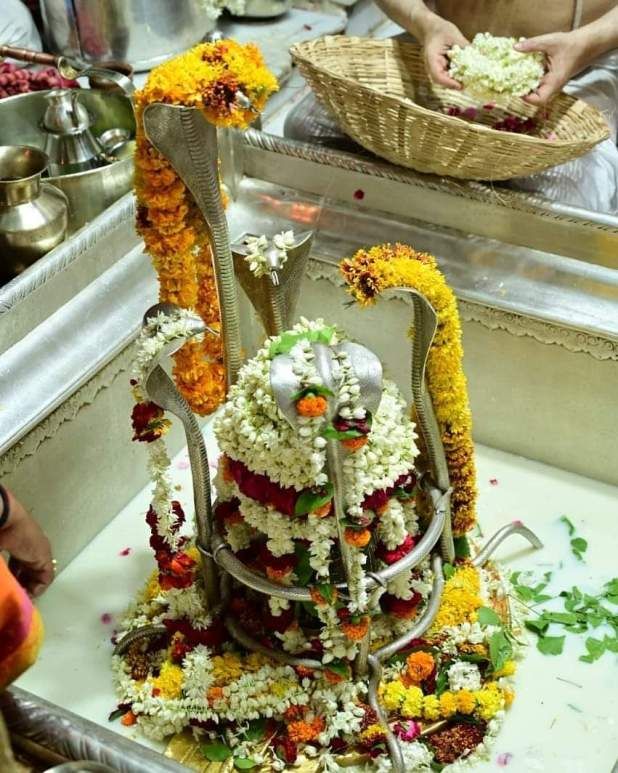
Kashi, also known as Varanasi, is the second home of Lord Shiva and Parvati. Kailash is Lord Shiva’s home, but when he got married to Parvati, they chose to live in Kashi during the winter months. Lord Shiva and Parvati loved their new home in Kashi. When Parvati’s parents saw their new home, they felt that it is not comfortable enough for their daughter. To please them, Lord Shiva asked one of his devotees to build them a suitable home. When Parvati saw her husband’s loving gesture, she was elated. She appeared in the form of Annapurna and fed everyone in the city. Once when Lord Shiva and Parvati were away from Kashi, Brahma brought a new king Divodasa to keep the city running smoothly. Divodasa asked Brahma to allow him to rule with full freedom and thus keep all the gods away from the city. Brahma’s boon to Divodasa meant that Lord Shiva and Parvati could not come back to their favourite city. Shiva really wanted to live in Kashi again, so he sent many messengers to request Divodasa to allow them. All the messengers who went to the city loved it so much that they started living in the city instead of returning to Shiva. Ultimately, Shiva asked for Vishnu’s help. Vishnu went to Divodasa and told him how much Lord Shiva wanted to live in Kashi. By denying them, Divodasa is losing his mental peace and his chance at attaining Moksha. So Divodas made a Shivlinga and placed it in a beautiful temple. Soon after that Lord Shiva and Parvati came back to Kashi and Divodas got Moksha
Temple
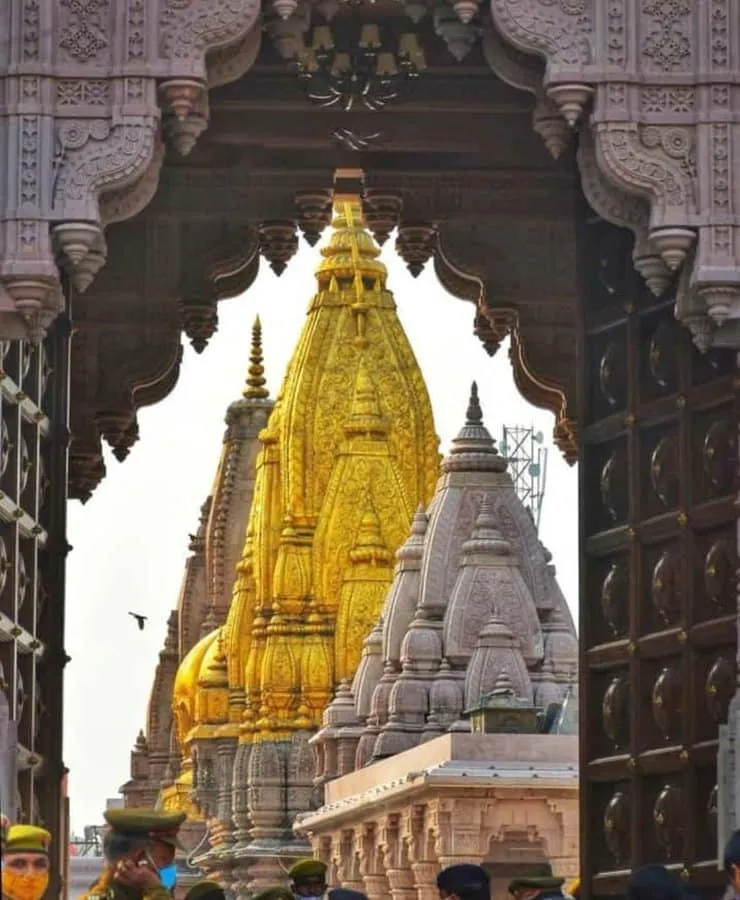
- Location:Situated on the western bank of the sacred Ganges River, the Kashi Vishwanath temple stands as a symbol of devotion and spirituality in the heart of Varanasi, one of the oldest continuously inhabited cities in the world.
- Style:The temple follows traditional North Indian temple architecture, characterized by its tall spire (shikhara), multiple domes, and intricate carvings. The architecture reflects a blend of Hindu and Mughal influences, showcasing the cultural diversity of the region.
- Materials: The temple is primarily constructed using sandstone and marble, with elaborate carvings adorning the walls, pillars, and domes. The use of these materials imparts a sense of grandeur and timelessness to the structure.
- Main Shrine(Garbhagriha):The sanctum sanctorum houses the lingam, the symbolic representation of Lord Shiva as Vishwanath (the ruler of the universe). Devotees offer prayers and perform rituals in front of the lingam, seeking the blessings of Lord Shiva.
- Golden Sprine(Shikhara):The temple's main spire, adorned with intricate sculptures and motifs, is covered in gold plating. The golden spire symbolizes the divine presence and splendor of Lord Shiva as Vishwanath (the lord of the universe).
- Courtyard(Sabha Mandap):The temple complex includes a spacious courtyard where devotees gather for worship, prayers, and religious ceremonies. The courtyard is adorned with ornate pillars and pavilions, creating a serene and sacred atmosphere.
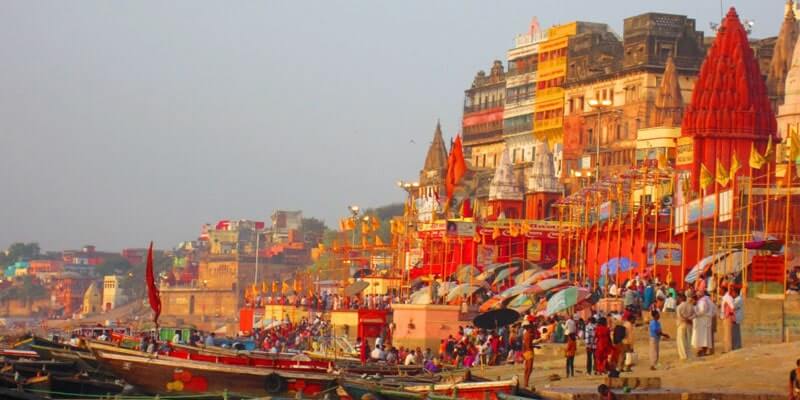
- Surroundings: The Kashi Vishwanath temple is surrounded by narrow lanes, bustling markets, and numerous smaller shrines dedicated to various Hindu deities. The temple's proximity to the Ganges River adds to its spiritual significance, with devotees often taking holy dips in the sacred waters before visiting the temple.
- Spiritual Significance:As one of the twelve Jyotirlingas and one of the holiest sites in Hinduism, the Kashi Vishwanath temple holds immense spiritual significance. Pilgrims from across the world visit the temple to seek the blessings of Lord Shiva and attain spiritual liberation (moksha).
Worshippingmethods
- Darshan:Devotees visit the Kashi Vishwanath temple to have darshan, or sight, of the lingam, which is believed to represent the formless aspect of Lord Shiva.
- Abhishekam:Ritualistic bathing or abhishekam of the lingam is performed with sacred substances such as water, milk, honey, yogurt, ghee, and sandalwood paste as a mark of devotion and purification.
- Pooja:Traditional poojas are conducted by priests and devotees, involving the offering of flowers, incense, fruits, and sweets to the deity. Mantras and prayers are chanted to invoke Lord Shiva's blessings.
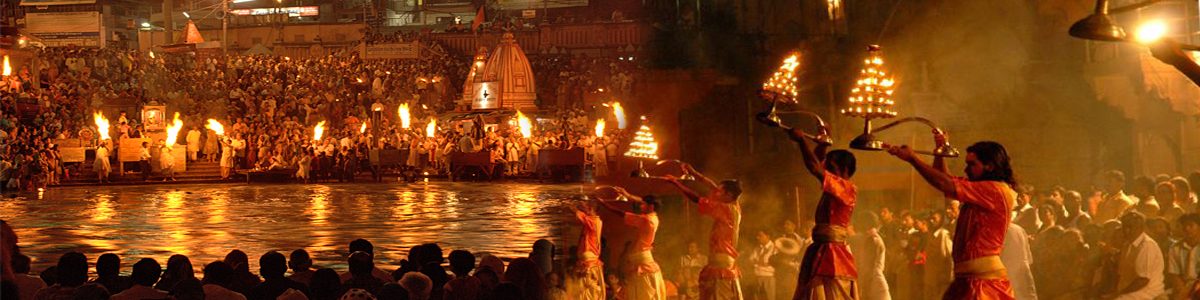
- Aarti:Devotees participate in aarti, a ceremonial waving of lamps, accompanied by devotional songs and hymns, expressing reverence and gratitude towards Lord Shiva.
- Pradakshina:Circumambulating the temple or the sanctum sanctorum is considered auspicious and is believed to bring blessings.
- Dakshina:Offering donations or dakshina to priests and the temple is a common practice to express gratitude and support the upkeep of the sacred place.
- Ganga Snan:Taking a holy dip in the Ganges River, which flows near the temple, is considered highly auspicious before visiting the Kashi Vishwanath temple.
- Bhajan-Kirtan:Singing devotional songs and hymns in praise of Lord Shiva is a common form of worship performed by devotees.
Significance
- Lord of the Universe:The name "Vishwanath" translates to "Lord of the Universe." The Vishwanath Jyotirlinga is thus regarded as the cosmic center of Shiva's presence and power, symbolizing his omnipresence and sovereignty over the cosmos.
- Varanasi (Kashi): Vishwanath Temple is located in Varanasi (also known as Kashi), one of the oldest and holiest cities in India. Varanasi is considered the spiritual capital of India and holds immense importance in Hinduism, making the Vishwanath Jyotirlinga one of the most revered pilgrimage sites for Hindus.
- Mythological Legend: According to Hindu mythology, the significance of the Vishwanath Jyotirlinga is associated with various legends. One such legend states that Lord Shiva manifested in the form of the Jyotirlinga at Varanasi to quell the pride of the demon king, Daksha, and to bless his devotees with liberation (moksha) and divine grace.
- Spiritual Benefits: Worshipping at the Vishwanath Jyotirlinga is believed to bestow spiritual merit, fulfillment of desires, and liberation from worldly sufferings. Devotees believe that offering prayers and performing rituals at this sacred site can help attain moksha (liberation) and spiritual enlightenment.
- Ganga River:Varanasi is situated on the banks of the Ganges River (Ganga), considered the holiest river in Hinduism. The presence of the Vishwanath Jyotirlinga near the Ganges further enhances its sanctity, and taking a holy bath in the river before worshipping Lord Shiva is considered highly auspicious.
- Historical and Cultural Significance: The Vishwanath Temple has a rich historical and cultural legacy, with records of its existence dating back several centuries. It has been a center of pilgrimage, worship, and spiritual learning for devotees, saints, and scholars throughout history.
Timings
Open Timings: The temple generally opens around 3:00 AM with the Mangala Aarti and closes around 11:00 PM after the Shringar Aarti. However, timings may vary slightly on special occasions and festivals. It's advisable to refer to the temple's official website or consult with local temple authorities for the most up-to-date timings.
Transportation
How to Reach: Varanasi Junction (often referred to as Varanasi Cantt) is the primary railway station connecting the city to various parts of India. Once you arrive at the station, taxis, auto-rickshaws, and cycle rickshaws are readily available to take you to the temple. Varanasi has an extensive road network and is well-connected with major cities of Uttar Pradesh and neighboring states. State-run buses, as well as private bus operators, provide regular services to and from Varanasi. The city's roads are usually bustling, so it's advisable to allow for some extra travel time.
Open in google mapsPrasadam
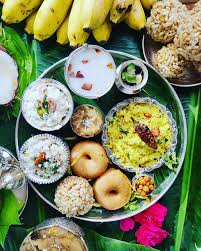
- Bilva Leaves: Bilva leaves (Aegle marmelos) are considered highly sacred to Lord Shiva. Devotees offer fresh Bilva leaves to the Shiva Lingam as a mark of devotion and reverence.
- Datura Flowers: Datura flowers (Datura metel) are another offering commonly associated with Lord Shiva. These flowers are believed to be dear to Shiva and are offered with deep devotion.
- Ganga Jal (Holy Water): Water from the Ganges River (Ganga Jal) is considered extremely sacred in Hinduism. Devotees may bring containers to collect Ganga Jal from the nearby river and offer it to Lord Shiva as a purifying and auspicious offering.
- Milk Abhishekam: Abhishekam (ritual bathing) of the Shiva Lingam with milk is a common practice at the Kashi Vishwanath Temple. Devotees pour milk over the Lingam while chanting prayers and mantras.
- Ghee Lamp: Lighting a ghee lamp (diya) is a traditional form of worship in Hindu temples. Devotees offer ghee lamps to Lord Shiva as a symbol of illuminating the inner self and dispelling darkness.
- Sweets: Various sweets such as ladoo, peda, and kheer are offered to Lord Shiva as prasadam. These sweets are distributed among devotees after being sanctified by the deity's blessings.
- Fruits: Offerings of fruits like bananas, apples, and coconuts are made to Lord Shiva as a token of devotion and gratitude.
- Modak: Modak, a sweet dumpling filled with coconut and jaggery, is considered a favorite delicacy of Lord Shiva. Devotees may offer modak as a special prasadam during worship.
- Tulsi Leaves: Tulsi leaves (Holy Basil) are considered sacred in Hinduism and are often offered to Lord Shiva as a mark of devotion and piety.
Stotram
"श्रीविश्वनाथमिदमाद्यं सर्वावस्थानवारणम्।
"Shri Vishwanatham idamadyam sarvaavasthaanavaaranam."
360° Virtual Tour of Kashi Vishwanath Jyotirlinga
Experience the divine Kashi Vishwanath Jyotirlinga temple as if you are there, with this interactive 360° virtual view.