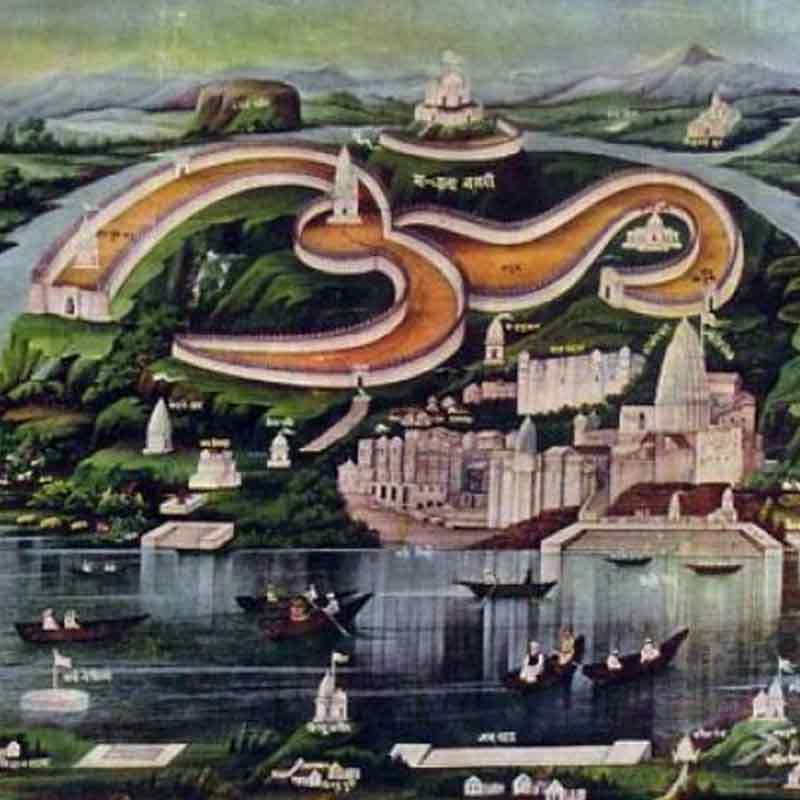
Once the mountain range, Vindhya worshipped Lord Shiva to get his blessings. He made a Shivlinga from mud and started his worship. He kept worshipping for a long time. When Lord Shiva appeared in front of Vindhya, he asked Vindhya to ask for any boon. Vindhya asked Lord Shiva to live on the mountain range. So, Lord Shiva created a Jyotirlinga where a part of him would live. This Jyotirlinga is situated on an island that is said to look like Om, and thus this Jyotirlinga is called Omkareshwar. Soon the sages and other gods got to know about the visit of Lord Shiva. They too came and worshipped Lord Shiva. They requested Lord Shiva to live on the mainland as well, and Lord Shiva agreed. He split the Jyotirlinga into two parts: Omkareshwar and Amaleswara. In the form of Omkareshwar, Lord Shiva lives on the island and Amaleswara lives on the mainland.
Formation
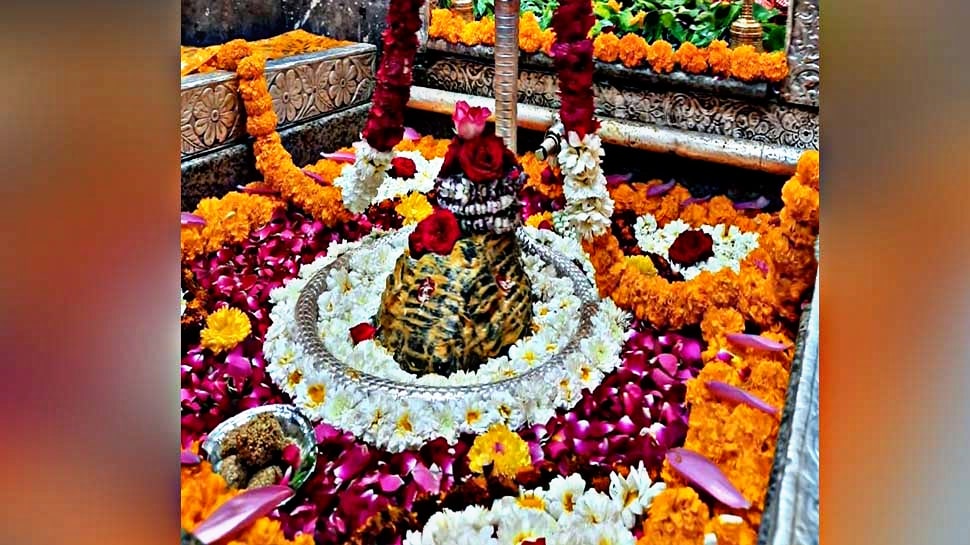
Temple
The architecture of Omkareshwar Jyotirlinga temple is a splendid fusion of traditional Hindu temple design and the tranquil beauty of its island setting. As one of the revered Jyotirlingas, it holds profound significance for devotees of Lord Shiva. The temple complex boasts a grand mandapa, or pillared hall, where worshippers gather for prayers and rituals. Towering above is the majestic shikhara, symbolizing Mount Kailash, Lord Shiva's celestial abode. Within the garbhagriha, the sanctum sanctorum, lies the sacred lingam, the focal point of devotion and offerings. Incorporating elements of Nagara and Dravidian architectural styles, the temple showcases intricate carvings, ornate sculptures, and pyramidal structures. Its decorative motifs narrate tales of Hindu mythology and divine beings, enriching the spiritual experience for visitors. Nestled amidst the serene waters of the Narmada River, the temple's surroundings exude serenity and natural splendor, enhancing its spiritual allure. Pilgrims and tourists flock to Omkareshwar Jyotirlinga seeking solace, divine blessings, and a connection to the eternal essence of Lord Shiva. In essence, the architecture of Omkareshwar Jyotirlinga temple is a testament to India's rich cultural heritage and spiritual legacy, beckoning devotees from far and wide to partake in its sacred aura and experience the transcendental presence of the divine.
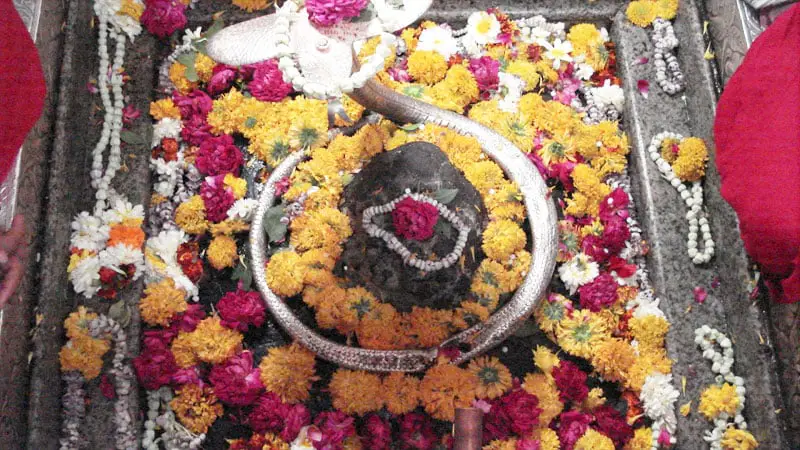
Worshipping Methods
One of the significant activities to undertake during an Omkareshwar tour is the Omkareswar Kshetra Parikrama. This circumambulation begins at the Omkareswar temple and proceeds around the hill. Adi Shankaracharya performed this parikrama when he visited the Omkareshwar Jyotirlinga, where he encountered his Guru, Sri Govindapada, and received teachings on Advaita philosophy. The endpoint of the parikrama offers a glimpse of this sacred spot, located near the Omkareswar temple.
Significance
- Omkareshwar- Mamleshwar Jyotirlinga has been the center of faith for millions of devotees for generations. This Temple is positioned in the Parikrama route of Mamleshwar. It's believed that by participating in Puja here, one gets the blessings of Lord Shiva immediately.
- Religious Importance: It is believed that Omkareshwar Mahadev Temple is an incarnation of Lord Shiva himself and as such, it is considered to be a truly holy place. The Temple complex attracts a large number of devotees who come to seek blessings from the Lord.
- Natural beauty: The Temple is located on an island in the Narmada River, which is considered to be a holy river in Hinduism. The island is surrounded by hills and forests, which add to the place's natural beauty. The island is shaped like the holy symbol 'Om', which is considered to be a sacred sound in Hinduism.
- Festivals and Celebrations: The Omkareshwar Jyotirlinga Temple complex has been the center of many festivals and celebrations throughout time, the most important of which is the Maha Shivratri festival. During this time, the Temple is decorated with lights and flowers, and a large number of devotees visit the Temple to offer prayers to Lord Shiva. Some of the auspicious days that are being celebrated here are Masik Shivaratri as well as Mahashivatri, Pradosh, and Amavasya, especially Somvati Amavasya and MahaShivaratri.
Timings
Before delving into the intricacies of the rituals, it's essential to know the temple's timings to plan your visit effectively. Omkareshwar Temple generally follows a daily schedule, and it's crucial to be aware of these timings to make the most of your spiritual journey:
- Morning Darshan: From 5:00 AM to 3:50 PM
- Evening Darshan: From 4:15 PM to 9:30 PM
- Mangal Aarti: From 5:00 AM to 5:30 AM
- Jalabhishek: From 5:30 AM to 12:25 PM
- Evening Aarti: From 8:20 PM to 9:05 PM
Aarti Timings
Aartis, or religious rituals involving the offering of lamps and prayers, are an integral part of the daily routine at Omkareshwar Temple. The temple conducts several aartis at different times of the day. Some of the significant aartis are:
- Mangal Aarti: This aarti takes place early in the morning before sunrise, usually around 5:00 AM. It is a serene and spiritually uplifting experience that marks the beginning of day's religious activities.
- Rudra Abhishek: Rudra Abhishek is a special puja performed to honor Lord Shiva. It is conducted around noon, typically at 12:00 PM.
- Sandhya Aarti: Evening aarti, known as Sandhya Aarti, is performed around sunset, approximately at 6:00 PM. This is a time when devotees gather to offer their prayers and seek Lord Shiva's blessings.
- Shayan Aarti: The last aarti of the day, Shayan Aarti, takes place around 9:00 PM. It signifies the time for Lord Shiva to rest and is a peaceful way to conclude the temple's daily rituals.
Transportation
The nearest railway station is Omkareshwar Road (Mortakka) station, about 12 km away from the temple. Taxis and autos are available from the station to reach the temple. Omkareshwar is well-connected by road. Buses run from major cities of Madhya Pradesh like Indore, Ujjain, and Khandwa to Omkareshwar. The roads are in good condition, making it convenient for those opting to drive themselves.
Open in Google MapsPrasadam
Prasadam given in Omkareshwar Jyotirlinga temple typically includes items like laddu, peda, coconut sweets, and sometimes fruits like bananas or apples. The specific prasadam offerings may vary from day to day or based on the rituals being performed at the temple. It's always a good idea to inquire locally or at the temple itself for the most accurate information on prasadam offerings.
Stotram
One of the famous stotrams (devotional hymns) associated with Omkareshwar Jyotirlinga is the "Omkareshwar Stotram." This stotram praises Lord Shiva, the presiding deity of the Omkareshwar Jyotirlinga temple. It glorifies Lord Shiva's attributes, forms, and the significance of the Jyotirlinga.
Here is the beginning of the Omkareshwar Stotram:
अविश्वा आधिपतयो महित्वां वयो युयुधिः।।
This stotram beautifully extols the various manifestations and attributes of Lord Shiva. You can find the complete stotram in various sources online or in books dedicated to Lord Shiva's hymns and prayers.
360° Virtual Tour of Omkareshwar Jyotirlinga
Experience the divine Omkareshwar Jyotirlinga temple as if you are there, with this interactive 360° virtual view.