Formation
The Ramnathaswamy
Temple in Rameswaram,Tamil Nadu, has its origins rooted in Hindu mythology. Legend has it that Lord Rama, after
defeating Ravana and rescuing Sita, worshipped Lord Shiva here to cleanse himself of the sin of killing
Ravana, who was a Brahmin. The temple's construction is attributed to various rulers, including the Pandya
and Nayak dynasties, and it reflects the Dravidian architectural style. The temple gained prominence due to its
association with the mythical bridge, Rama Setu, built by Lord Rama. The complex features grand corridors and 22
theerthams (holy water tanks), making it a revered pilgrimage site for Hindus. Pilgrims believe that a visit to
the Ramnathaswamy Temple holds immense spiritual significance and aids in attaining purification and divine blessings.
Temple
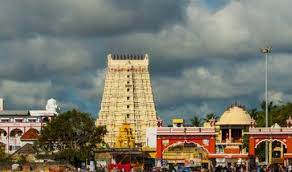
- Historical Significance: The temple's origins are traced back to ancient times, and it is believed to have been built by Lord Rama, an incarnation of Lord Vishnu, as per Hindu mythology. The temple is associated with the epic Ramayana and is considered one of the holiest places in Hinduism.
- Architecture: The Rameshwaram Temple is renowned for its Dravidian architectural style. It features towering gopurams (ornate entrance towers) adorned with intricate sculptures and carvings. The temple complex covers a large area and consists of various mandapas (halls), shrines, and sacred tanks.
- Corridors and Sacred Tanks: One of the distinctive features of the temple is its long corridors, which are among the longest in the world. The temple also has several sacred tanks (teerthams), including Agni Theertham, where devotees perform ritualistic baths before entering the temple.
- Rituals and Festivals: The temple is known for its elaborate rituals and festivals, which attract devotees from far and wide. Special ceremonies and poojas are conducted daily, and major festivals such as Mahashivaratri and Navratri are celebrated with great fervor.
- Jyotirlinga and Sethu Karai: The temple houses one of the twelve Jyotirlingas, which symbolizes the radiant form of Lord Shiva. According to mythology, Rameswaram is also associated with the legendary bridge (Sethu Karai) built by Lord Rama's army to reach Lanka (Sri Lanka) to rescue his wife, Sita, from the demon king Ravana.
- Pilgrimage Destination: Rameshwaram Temple is a significant pilgrimage destination for Hindus, and many devotees undertake the sacred journey to seek blessings and perform ancestral rituals.
WorshippingMethods
Worship at the Ramnathaswamy Temple in Rameswaram follows elaborate Hindu rituals deeply rooted in tradition. Devotees engage in a series of rituals to seek the blessings of Lord Shiva. The day typically begins with the Nirmalya Darshan, where the deity is adorned with fresh flowers and sacred ash. Abhishekam, the ritualistic bathing of the Shiva Linga with water, milk, ghee, and other holy substances, is a crucial part of the worship. The priests conduct various poojas, including the Rudra Abhishekam, to honor Lord Shiva. The temple's unique feature is the belief in the purification ritual in the 22 theerthams (sacred water tanks) within the complex. Pilgrims often undertake a ceremonial bath in these theerthams before entering the main sanctum. The worship methods at Ramnathaswamy Temple symbolize devotion, purity, and spiritual connectivity with Lord Shiva, creating a sacred atmosphere for devotees.
Significance
The Ramnathaswamy Temple in Rameswaram holds immense significance in Hinduism due to its association with the epic Ramayana and its role in Lord Rama's quest for redemption. Devotees believe that Lord Rama established this temple to seek forgiveness for the perceived sin of killing Ravana, a Brahmin. The temple is renowned for its unique Dravidian architecture and is one of the twelve Jyotirlinga shrines dedicated to Lord Shiva. Pilgrims consider a visit to this sacred site as essential for spiritual purification and seek blessings for salvation. The temple's large corridors, intricate carvings, and 22 theerthams (holy water tanks) add to its cultural and architectural significance. The Ramnathaswamy Temple stands as a symbol of devotion, penance, and the rich cultural heritage of Rameswaram, drawing devotees from far and wide for centuries.
Timings
The temple remains open from 5 a.m. to 1 p.m. and from 3 p.m. to 9 p.m. every day. The timings for the auspicious Spatika Lingam Darshan are between 5 a.m. and 6 a.m. every day.
Transportation
Flight: Madurai Airport is the nearest airport to Rameshwaram. There are several flights from major cities in India to Madurai, and the flight time is typically around 1 hour. From Madurai, you can take a train or bus to Rameshwaram. Train: There are several trains that run from major cities in India to Rameshwaram.10 Aug 2023
Open in Google MapsPrasadam
The prasadam at the Ramnathaswamy Temple in Rameswaram typically includes sacred offerings such as holy water from the temple's 22 theerthams (holy tanks), vibhuti (sacred ash), kumkum (vermilion), and small packets of Bilva leaves. The Bilva leaves hold particular significance in Lord Shiva's worship. Devotees consider these prasadam items as blessed tokens from the divine and often cherish them as symbols of purity and spiritual grace. The distribution of prasadam is an integral part of the temple experience, reinforcing the connection between the devotee and the sacred energy of the deity, fostering a sense of spiritual well-being.
Stotram
"रामेशं स्थापितं तोयं दर्शितं जगत्॥"
"Ramesham sthapitam toyam darshitam jagat."
360° Virtual Tour of Ramnathswamy Jyotirlinga
Experience the divine Ramnathswamy Jyotirlinga temple as if you are there, with this interactive 360° virtual view.