Formation
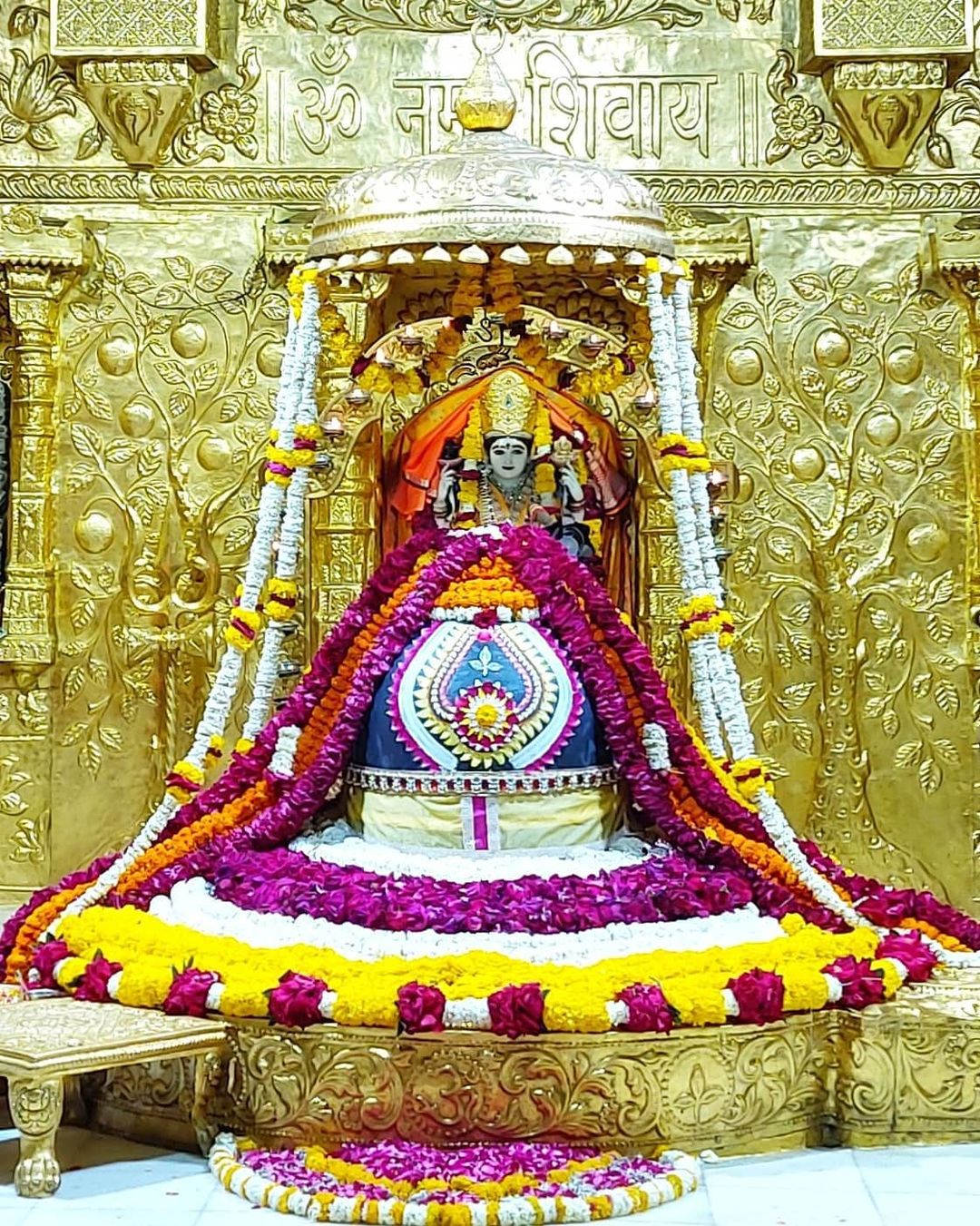 Daksha was the son of Brahma. He married his 27 daughters to Chandra, the moon god. Chandra loved one of the sisters Rohini very much. So much that Chandra started ignoring his other wives and started spending all of his time with Rohini.Naturally, this angered his remaining 26 wives. They all went to their father Daksha and complained. Daksha then talked to Chandra and reminded him that he had 27 wives and he should take care of each one of them. Chandra agreed but later kept on spending all his time with Rohini only.This angered Daksha too. He cursed Chandra that his body would perish. This impacted everyone since Chandra was the only source of light in the night sky.Chandra and other gods went to Lord Brahma to get his help. Brahma asked Chandra to worship Lord Shiva and ask for his help.As instructed, Chandra made a Shivlinga and started worshipping Shiva. This pleased Shiva, who appeared before him and told him to ask for a boon. Chandra asked Shiva to undo the curse upon him.Shiva told him that the curse can not be undone, but he can minimize the effect. He blessed Chandra that once he perishes, he will again start regaining his body. Shiva also let Chandra live on his head so that no one else could harm him in his weaker state.Thus the moon waxes and wanes. Since then Shiva is also known as Chandrasekhar and Somnath (Som means moon or Chandra).Chandra made a temple where he worshipped Lord Shiva. The Shivlinga that he made transformed into a Jyotirlinga when Lord Shiva agreed to leave a part of himself there
Temple
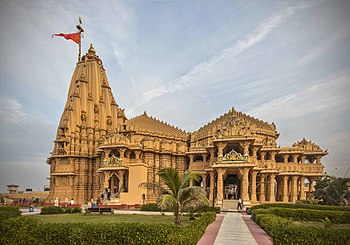
- Historical Significance: The Somnath Temple has a long and storied history, dating back to ancient times. It is believed to have been originally built by the moon god, Soma, and later reconstructed several times due to destruction by foreign invasions and natural disasters.
- Jyotirlinga:The main deity of the temple is Lord Somnath, a manifestation of Lord Shiva. It is one of the twelve Jyotirlingas, which are considered the holiest abodes of Lord Shiva.
- Architecture: The temple showcases exquisite architecture, blending various styles from different periods of its construction and reconstruction. The present structure of the temple is built in the Chalukya style of architecture and is adorned with intricate carvings and sculptures.
- Spiritual Significance: Somnath Temple holds immense spiritual significance for Hindus. Devotees from all over the world visit the temple to seek blessings, offer prayers, and perform rituals.
WorshippingMethods
The rituals performed at Somnath Temple are deeply rooted in Hindu traditions and are aimed at invoking the blessings of Lord Shiva. Each ritual holds symbolic significance, connecting the devotee with the divine presence. Some of the prominent rituals include:
- Rudrabishek:This ritual involves the ceremonial bathing of the Shiva Linga with various sacred substances, including milk, honey, and water.
- Devotees believe that Rudrabhishek brings purification and divine blessings, symbolizing the cosmic union of the devotee with Lord Shiva.
- Shringar Darshan:The Shringar Darshan is a visual feast for devotees, as it involves adorning the deity with exquisite jewelry, clothing, and fragrant flowers.
- This ritual signifies the celebration of the divine beauty and magnificence of Lord Shiva.
- Aarti Aarti is a ritual of worship where the devotees express their devotion through the waving of lighted lamps before the deity.
- The rhythmic chanting of prayers and the melodious tunes of the aarti create a devotional atmosphere that elevates the spiritual experience.
- Parshod Kaal Pooja:This ritual is performed during the Pradosh Kaal, considered an auspicious time for worship.
- Devotees believe that performing the Pradosh Kaal Pooja at Somnath brings prosperity, health, and spiritual well-being.
- MahapoojaMahapuja is an elaborate form of worship conducted with a grandeur that befits the divine stature of Lord Shiva.
- Devotees participate in the Mahapuja to seek the fulfillment of their wishes and to express their gratitude towards the Almighty.
Significance
Beyond the rituals and timings, Somnath Temple holds a profound significance in the hearts of millions of devotees. It is not just a place of worship; it is a symbol of resilience, faith, and cultural heritage. The temple has witnessed the rise and fall of civilizations, yet it stands tall, embodying the timeless spirit of devotion.
Cultural Heritage
- The architectural grandeur of Somnath Temple reflects the artistic prowess of ancient Indian craftsmen.
- The temple’s design, with its intricate carvings and majestic spire, serves as a testament to the rich cultural heritage of India.
Symbol of Resilience
- Somnath Temple has faced repeated invasions and destruction throughout history, yet it has been rebuilt each time.
- The temple’s resilience symbolizes the indomitable spirit of the people and their unwavering faith in the divine.
Timings
The temple is generally open from 6:00 AM to 9:00 PM. However, specific rituals and aarti timings can vary, so it's advisable to check the temple's official website or contact the temple authorities before planning a vis
Transportation
Somnath has its own railway station, and it is well-connected to major cities of Gujarat and India. Regular bus services connect Somnath to various cities in Gujarat. Additionally, the state's extensive road network makes it convenient for visitors to drive to Somnath or hire taxis from major cities like Ahmedabad or Rajkot.
Open in Google MapsPrasadam
- Laddu:Sweet balls made from flour,sugarand ghee.
- Peda:Sweet,dense milk-based confectinery.
- Churma:Sweetened and coarsely ground wheat mixd with ghee and sugar.
- Modak:Sweet dumplings made with coconut and jaggery.
- Puri:Deep fried bread made from wheat flour.
- Sabudhana Khichidi:Topioca pearls cooked with spices and peanuts.
Stotram
"प्रभाते समयं ज्योतिर्लिङ्गं सोमनाथं भक्त प्रयोगैर्गुणैरुपास्य"।
"Prabhāte samayam jyotirliṅgam somanātham bhakta prayogairguṇairupāsya."
360° Virtual Tour of Somnath Jyotirlinga
Experience the divine Somnath Jyotirlinga temple as if you are there, with this interactive 360° virtual view.