Formation
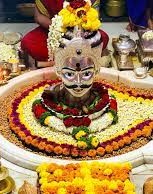
Once there was a severe famine and there was an acute food shortage. Sage Gautama was blessed by gods and he never had any shortage of food. He opened his ashram for everyone and fed everyone who came to him. His generosity caused other sages to feel jealous. Other sages planned to hurt sage Gautama. They sent a weak cow to Gautama’s fields. When Gautama saw the cow he tried to feed the cow, but before he could help the cow, it died. That’s when all the other sages came out blaming sage Gautama for the cow’s death. Sage Gautama was very sad about the death of the cow. He started worshipping Lord Shiva for penance. Gautama made over 100 Shivlinga and his worship pleased Shiva. When Shiva came, Gautama asked him to send Ganga to wash away his sins. Lord Shiva told him that he committed no sin. Still, Lord Shiva asked Ganga to come down to the sage’s ashram. Ganga came and was known as the Godavari there. Sage Gautama believed that all his sins were washed away. In Trimbakeshwar the Jyotirlinga appeared with Godiva river. The Jyotirlinga has faces of Brahma, Vishnu and Shiva. This is the only Jyotirlinga where all three deities appear together.
Temple
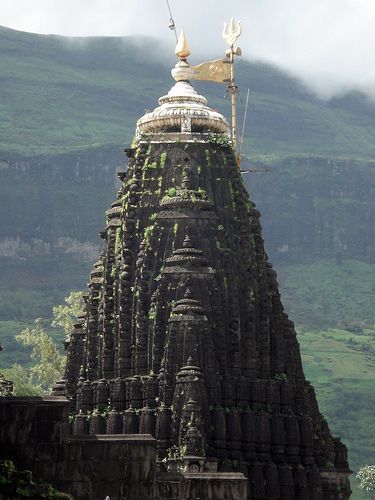
- Significance:Trimbakeshwar Jyotirlinga holds immense religious significance in Hindu mythology and spirituality. It is believed to be the abode of Lord Shiva and is associated with various legends and stories.
- Architecture:The temple showcases a blend of architectural styles, predominantly the Hemadpanthi style of medieval Maharashtra architecture. Its spire is adorned with intricate sculptures and carvings typical of Hindu temple architecture.
- Sacred Location:The temple is located near the origin of the sacred Godavari River, adding to its spiritual significance. Bathing in the holy waters of the Godavari near Trimbakeshwar is considered spiritually purifying.
- Pilgrimage Destination:Trimbakeshwar attracts devotees and pilgrims from all over India and abroad who come to seek the blessings of Lord Shiva. It is a popular destination for religious tourism and pilgrimage.
- Worship and Rituals:Devotees engage in various worship methods at the temple, including abhishekam (ceremonial bathing of the lingam), offering prayers, lighting incense and lamps, and participating in rituals and festivals.
- Astrological Significance:Trimbakeshwar is renowned for its astrological significance. It is associated with specific planetary positions and astrological alignments, and worshipping here is believed to alleviate the adverse effects of planetary afflictions.
- Spiritual Experience:Visiting Trimbakeshwar Jyotirlinga offers devotees a profound spiritual experience, fostering a sense of devotion, purity, and reverence for Lord Shiva.
Worshippingmethods
- Abhishekam (Holy Bath): One of the primary forms of worship at Trimbakeshwar involves performing abhishekam, which is the ceremonial bathing of the lingam with sacred substances such as water, milk, honey, yogurt, ghee, and holy water from the Godavari River. Devotees believe that performing abhishekam with devotion and purity pleases Lord Shiva and brings blessings.
- Offering Prayers and Mantras: Devotees offer prayers, chants, and mantras to Lord Shiva, expressing their reverence and seeking his divine grace. Reciting sacred texts like the Shiva Purana, Rudram, and Shiva Stotras is considered highly auspicious and conducive to spiritual growth.
- Offering Bel Leaves and Flowers:Bel leaves (wood apple leaves) are considered sacred and are offered to Lord Shiva as a symbol of devotion. Devotees also offer flowers, especially white flowers like jasmine and lotus, which are believed to be dear to Lord Shiva.
- Lighting Incense and Lamps: Lighting incense sticks and oil lamps (diyas) is a common practice during worship at Trimbakeshwar Jyotirlinga. It is believed that the fragrance of incense and the light of lamps please the deity and dispel darkness, symbolizing spiritual enlightenment.
- Circumambulation (Pradakshina): Devotees perform circumambulation around the sanctum sanctorum (pradakshina) as a mark of reverence and devotion. This act symbolizes the cyclical nature of creation and the devotee's surrender to the divine.
- Participating in Rituals and Festivals: Devotees often participate in various rituals and festivals conducted at Trimbakeshwar Jyotirlinga, such as Mahashivaratri, Shravan Somvar (Mondays in the Hindu month of Shravan), and Pradosha. These festivals provide opportunities for intensified worship and spiritual communion with Lord Shiva.
- Charitable Acts (Daan): Engaging in charitable acts such as donating food, clothing, or money to the needy is considered a form of worship connected to Trimbakeshwar Jyotirlinga. It is believed to earn divine merit (punya) and invoke Lord Shiva's blessings.
Significance
- Presence of Lord Shiva: The Trimbakeshwar Jyotirlinga is believed to be the abode of Lord Shiva, one of the principal deities of Hinduism. It represents the cosmic manifestation of Lord Shiva's divine energy and is revered as a powerful site for worship and pilgrimage.
- Pilgrimage Destination:Trimbakeshwar is considered one of the twelve Jyotirlingas, sacred shrines where Lord Shiva is worshipped in the form of a lingam of light. Pilgrims from all over India and abroad visit Trimbakeshwar to seek blessings and spiritual fulfillment.
- Mythological Significance: According to Hindu mythology, the Trimbakeshwar Jyotirlinga is associated with several legends and stories. It is believed to be the place where Lord Shiva resided with his consort Parvati and where the sacred river Godavari originates.
- Spiritual Cleansing: Bathing in the holy waters of the Godavari River near Trimbakeshwar is considered highly auspicious and spiritually purifying. It is believed to wash away sins and bestow divine blessings upon devotees.
- Fulfillment of Wishes:Devotees visit Trimbakeshwar Jyotirlinga to seek fulfillment of their prayers and desires. It is believed that sincere devotion and worship at this sacred site can lead to the attainment of spiritual liberation (moksha) and fulfillment of worldly aspirations.
- Astrological Significance:Trimbakeshwar is also renowned for its astrological significance. The temple houses one of the twelve Jyotirlingas, which are associated with specific planetary positions and astrological alignments. It is believed that worshipping at Trimbakeshwar can alleviate the adverse effects of planetary afflictions and bring prosperity and well-being.
Timings
Open Timings: The temple generally opens at 5:30 AM and closes around 9:00 PM. However, timings can shift during special occasions, festivals, and rituals. It's recommended to consult the temple's official website or contact local authorities for the most accurate timings.
Transportation
Nasik Road Railway Station is the closest major railway station, situated about 29 km away from Trimbakeshwar. Taxis and buses are available from the station to reach the temple. Trimbakeshwar is well-connected by road. Regular state transport buses run from major cities in Maharashtra, including Mumbai, Pune, and Aurangabad, to Trimbakeshwar. The journey by road is scenic, especially during the monsoon season, offering views of the verdant Western Ghats.
Open in google mapsPrasadam
- Mahaprasad: This is the main prasadam offered at the temple, consisting of rice, lentils, vegetables, and sweets. It is considered highly auspicious and is distributed to devotees after being offered to the deity.
- Panchamrut: Panchamrut is a sacred mixture of five ingredients: milk, yogurt, honey, ghee (clarified butter), and sugar. It is believed to have purifying properties and is offered to Lord Shiva as a symbol of devotion.
- Bel Leaves:Bel (wood apple) leaves are considered sacred and are offered to Lord Shiva as part of worship rituals. They symbolize purity and are believed to please the deity.
- Coconut:Coconut is another common offering made to Lord Shiva in many temples, including Trimbakeshwar Jyotirlinga Temple. It represents fertility, purity, and prosperity.
- Flowers: Devotees offer various flowers, especially white flowers like jasmine and lotus, to the deity as a gesture of reverence and devotion.
- Modak: Modak, a sweet dumpling made of rice flour or wheat flour stuffed with jaggery, coconut, and nuts, is considered a favorite of Lord Ganesha, who is often worshipped alongside Lord Shiva. Hence, it is sometimes offered as prasadam at Trimbakeshwar Jyotirlinga Temple.
- Sandalwood Paste and Kumkum: Sandalwood paste and kumkum (vermilion) are often offered to the deity as a mark of respect and devotion. Devotees may receive a small amount of these substances as prasadam after offering their prayers.
Stotram
"गौतमीतटे तु यं ज्योतिर्लिङ्गं त्र्यम्बकं शिवं"।
"Gautamite tate tu yam jyotirlingam tryambakam shivam."