Formation
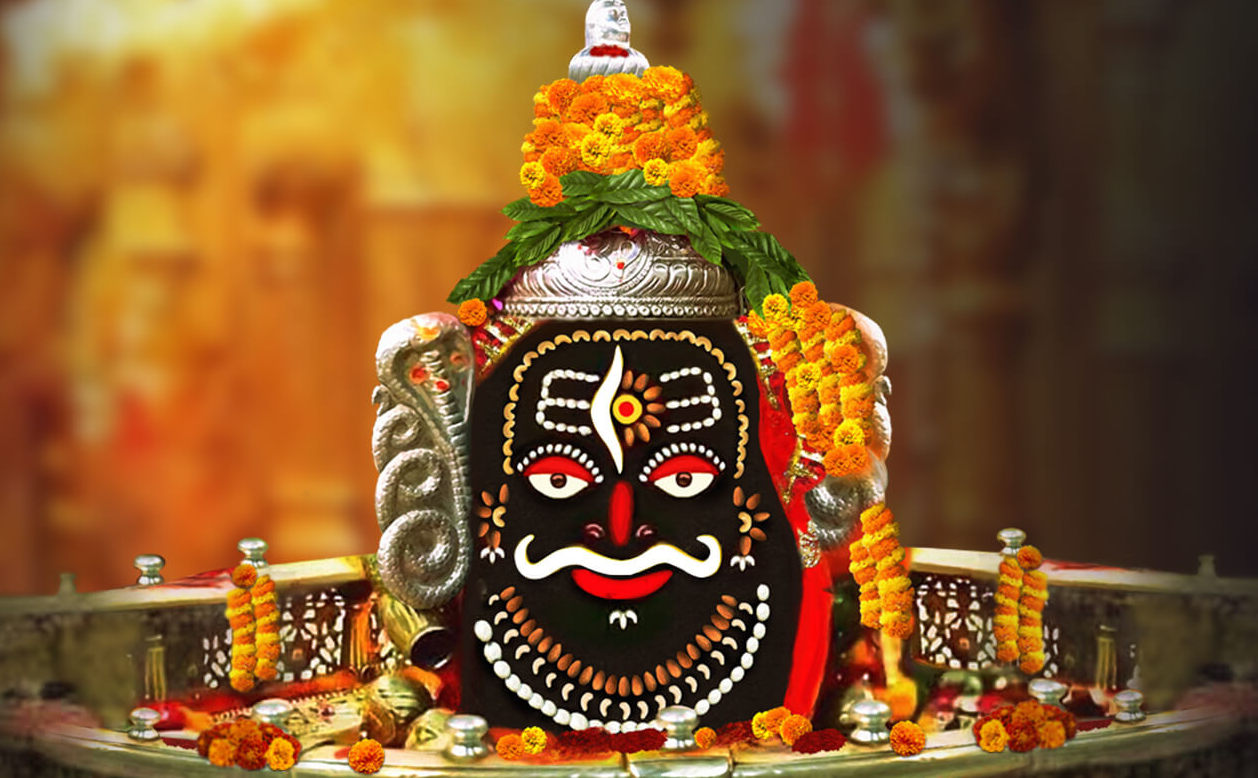 Once there was a demon called Dushana who built an army and was terrorizing everyone. One by one they were destroying the cities and villages.When they were coming towards Ujjain, the sages who lived in the nearby forests saw the army. They started praying to Lord Shiva to come and save the city. Even when the demon army was destroying the forest and everything in their path, the sages kept praying.Ultimately, Dushana and his army reached the sages and were about to kill them. Sages didn’t run away seeing the demons. They kept worshipping Lord Shiva. This pleased Lord Shiva and he appeared there himself.
Lord Shiva was angry and his wrath was directed towards the demon army. A bloody battle took place where Lord Shiva killed Dushana and his entire army.A Jyotirlinga appeared in the place where Lord Shiva first appeared. His this fierce form is known as Mahakal since he came as Lord of Death. This is the reason why the idol in this temple is facing south, unlike all other temples. It is said that only in death one faces south. Lord Shiva is representing death itself and his idol is Dakshinmukhi or facing south.
Temple
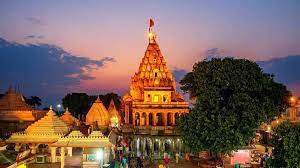
- Historical Significance: The temple has a rich historical background and is believed to have been built in the 5th century AD. However, its current structure dates back to the 18th century.
- Jyotirlinga: main deity of the temple is a lingam (an abstract representation of Shiva) known as Mahakaleshwar. It is one of the twelve Jyotirlingas, representing an important pilgrimage site for Shiva devotees.
- Architecture: The temple showcases a mix of architectural styles, including Maratha, Bhumija, and Chalukya. The spire of the temple is adorned with intricate carvings and sculptures.
- Rituals and Festivals: The temple witnesses a large number of devotees throughout the year, especially during the Maha Shivaratri festival. Various rituals and ceremonies are performed daily, including the Bhasma Aarti, which is a special ritual where ashes (bhasma) from the cremation grounds are applied to the lingam.
- Spiritual Significance: The Mahakaleshwar Temple holds immense spiritual significance among devotees, who believe that offering prayers here brings fulfillment of desires and blessings from Lord Shiva.
WorshippingMethods
The Mahakaleshwar Temple Ujjain is not just a place of architectural grandeur; it’s a vibrant hub of religious activity and rituals. The temple is open for devotees throughout the day, but the early morning “Bhasma Aarti” is the most revered and captivating ritual.
The Bashma Harti Involves
- Smearing the lingam with sacred ash.
- Chanting hymns.
- The rhythmic sound of bells and conch shells.
Witnessing this mesmerizing ceremony is a spiritual experience that leaves a lasting impression on devotees. Apart from the Bhasma Aarti, the temple hosts various other rituals and festivities throughout the year. The Mahashivratri festival, in particular, witnesses a massive influx of pilgrims who come to seek the blessings of Lord Shiva.
Significance
The Mahakaleshwar Jyotirlinga is considered one of the twelve Jyotirlingas, which are believed to be the most sacred abodes of Lord Shiva. Jyotirlingas are self-manifested lingams (symbolic representations) of Lord Shiva and are highly revered by devotees.
Mahakaleshwar Form: The presiding deity, is a manifestation of Lord Shiva in his fierce form. It is believed that worshiping Mahakaleshwar Jyotirlinga can provide spiritual strength, protection, and liberation (moksha) from the cycle of birth and death.
Maha Shivaratri: The festival of Maha Shivaratri holds special significance at the Mahakal Temple. Devotees from all over the country gather to celebrate this auspicious occasion, offering prayers and performing rituals throughout the night to seek the blessings of Lord Shiva.
Historical and Mythological Significance: Mahakal Temple has a rich historical and mythological background. It is mentioned in ancient texts like the Puranas and has been a center of spiritual and cultural significance for centuries. According to mythology, Lord Shiva appeared in the form of Mahakaleshwar to protect the city of Ujjain.
Timings
Morning Timings:
- Bhasma Aarti (Early Morning Ritual): 4:00 AM to 6:00 AM (only for registered devotees, prior registration is required)
- Morning Darshanam: 6:00 AM to 7:00 AM
- Morning Bhasma Aarti: 7:00 AM to 7:30 AM
Afternoon Timings:
- Afternoon Darshanam: 12:30 PM to 1:30 PM
Evening Timings
- Evening Darshanam: 4:00 PM to 6:00 PM
- Evening Bhasma Aarti: 6:30 PM to 7:00 PM
Night Timings:
- Night Darshanam: 7:30 PM to 10:00 PM (during normal days)
- Shayan Aarti (Night Aarti): 10:30 PM to 11:00 PM (during normal days)
Transportation
Ujjain Railway Station is a major junction and is well-connected with major cities across India. The station is just a few kilometers away from the temple, and auto-rickshaws, cabs, and cycle rickshaws are readily available. Ujjain has a good road network and is easily accessible from various cities in Madhya Pradesh and neighboring states. State-run buses, as well as private buses, operate frequently to Ujjain.
Open in Google MapsPrasadam
- Bhasma (Sacred Ash):considered highly auspicious, bhasma is often distributed to devotees as prasadam. It symbolizes purity and the transient nature of life.
- Vibhuti (Sacred Ash for Tilak): Similar to bhasma, vibhuti is used as a tilak (forehead mark) by devotees and is believed to bestow spiritual protection and blessings.
- Holy Water from River Shipra:Water from the sacred River Shipra, considered highly purifying, is often given to devotees as prasadam. It is believed to cleanse the soul and remove sins
- Special Sweets:Depending on the occasion, special sweets like laddoos, pedas, or other traditional Indian sweets may be offered as prasadam. These sweets symbolize the sweetness of devotion and are considered blessed by the deity.
- FlowersFlowers offered to the deity during worship are sometimes distributed to devotees as prasadam. They are seen as symbols of devotion and purity.
Stotram
"उज्जयिन्यां महाकालमोंकारं ममलेश्वरम्" ।
"Ujjayinyam Mahakalam Omkaram Mamaleshwaram."
360° Virtual Tour of Ujjain Mahakaleshwar Jyotirlinga
Experience the divine Ujjain Mahakaleshwar Jyotirlinga temple as if you are there, with this interactive 360° virtual view.